The art world in focus
Subscribe to our newsletter for news and insights on artists, galleries and exhibitions.

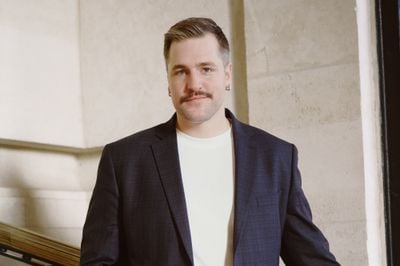
Karim Crippa: “I am here for an evolution, not a revolution.” Courtesy Art Basel. Photo: Matthieu Croizier.
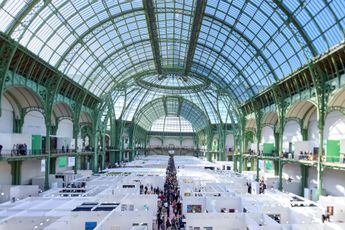
Art Basel Paris has today announced the full list of galleries taking part in its first edition under the leadership of new director Karim Crippa, with a total of more than 200 exhibitors from 41 countries, including almost 30 new additions.
The French fair has maintained these figures from its 2025 edition, where the introduction of its V-VIP preview day proved fruitful for big name galleries. This year’s edition, which will open in October, will take place against a backdrop of positive news for the French market, which grew nine percent year-on-year in 2025, according to the latest Art Basel & UBS Global Art Market Report.
Ahead of the fair, Crippa told Ocula he is feeling “a form of cautious optimism” regarding the state of the market generally, and attributed regional growth to the “tireless efforts” made by galleries to make Paris an attractive place for the art world to do business.
“We’re really benefiting from this arduous and very complex work that French galleries have done,” he said. “And when I say ‘we’, I of course mean the fair, but beyond that, the artists whose works are being sold, the collectors who come and purchase works, and of course the galleries who participate.”
According to the Art Basel UBS report, following two years of contraction, in 2026 France’s art market returned to pre-2019 levels. It now accounts for eight percent of the global trade, making it the fourth-largest market worldwide and the largest in the European Union.
Crippa attributed this growth in part to an understanding of the importance of culture across France and within Paris in particular, and to the subsequent support the sector receives. “The arts are truly a USP of Paris,” he said. “There’s a consciousness, be it at a city or national level, that this is something that helps Paris and France to stand out in the international scene.”
Crippa took up his post last November, having worked for Art Basel since 2018, most recently as head of communications for the Paris edition. Asked about which elements of the fair he turned his attention to first, he said: “I am here for an evolution, not a revolution, and I think we’ve been doing a lot of things really well.”
However, he does, he said, hope to “sharpen the contours of what the fair is about”, and to build on its “Parisian-ness”. “That can mean a lot of things,” he explained, “Paris is, of course, elegance and refinement and romanticism, and perhaps also a certain idea of exclusivity in a desirable way.”
“But it’s also the diversity of the city, it’s the resourcefulness of its creative scene, its fearlessness, its desire to be audacious and to not shy away from experimenting with things. It’s the fair’s aim is to reflect that... It’s obviously not a qualitative thing and not a quantitative one, but certainly that’s something we’re working on.”
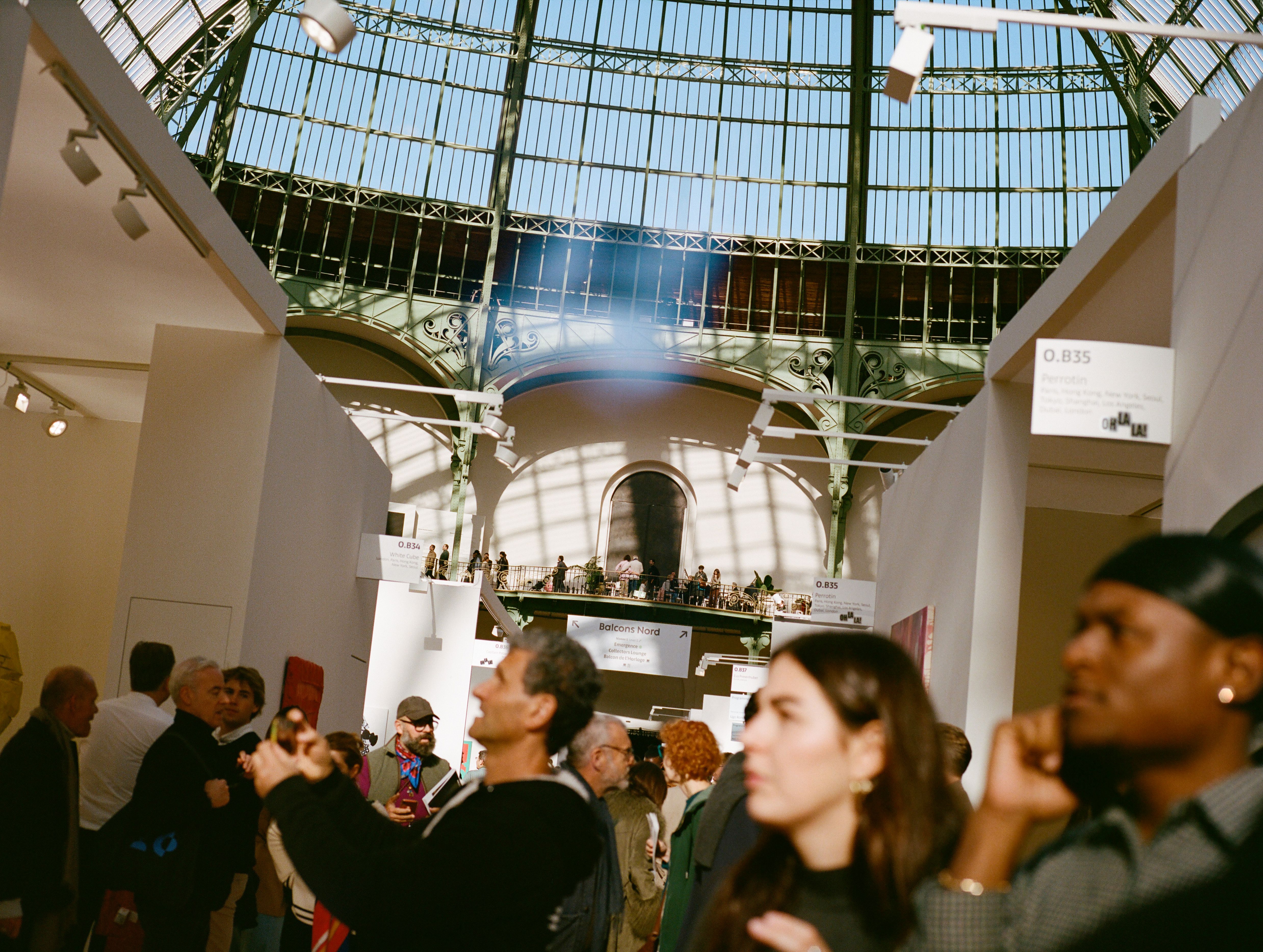
Last year’s Paris edition saw the introduction of an additional preview day before the fair’s First Choice VIP opening, with galleries permitted to invite up to six guests to tour the fair before all other visitors. The move was an attempt to address overcrowding, and to offer an “intimate” experience for V-VIP collectors.
According to Crippa, feedback from galleries was that the event, titled Avant-Première, did allow them to engage in a quieter and calmer environment. However, he pushed back against the idea that the move was targeted only towards blue-chip galleries and their mega-collectors.
“If a seven-year-old gallery from Berlin is doing the Galeries section for the first time, showing predominantly emerging artists and showing upstairs, then your most important collector is probably not the same person as somebody who is showing in the middle of the nave,” he said. “So that creates a blend of people and an exchange of ideas and perspectives for our exhibitors, which is ultimately what we’re looking for.”
In the Galeries section, which hosts the fair’s most established offerings, returning big names include Gagosian, Hauser & Wirth, David Zwirner and White Cube. Local galleries will also make a strong showing, with more than 16 Paris-based spaces, including Petrine, Perrotin and Alime Rech.
Twenty new galleries will also join the roster, including Isabella Ritter (Paris), Empty Gallery (Hong Kong) and Pace Di Donna Schrader Galleries (New York). The latter will mark the first presentation at the Paris fair for the Pace Gallery-Emmanuel Di Donna-David Schrader collaboration, which launched in December last year with plans to become “the leading global gallery devoted to secondary market sales”.
In an uptick from previous years, Galeries will also feature a record 12 joint-booth presentations. Collaborations will include Michael Rosenfeld Gallery and Jeffrey Deitch, which will show works by Beauford Delaney and Alteronce Gumby, and Nicoletti and seventeen, which will present new works by Ana Viktoria Dzinic, Josèfa Ntjam, Tarek Lakhrissi, Gabriele Beveridge, Nina Davies and Justin Fitzpatrick.
Asked if this rise in joint booths was driven by an increased desire to share the cost of exhibiting, Crippa said: “Well, I think it’s a bit of everything. But chiefly, I think the most important thing is that it’s a savvy solution for galleries to participate in the fair, where space is very limited.”
He continued: “I think the most successful presentations, and there have been many of them, if not all of them, are the ones where what you see is more than the sum of two parts. It’s not just two programmes put next to each other, but there’s a real dialogue going on between the galleries who chose to partner.”
In the Emergence section, dedicated to spotlighting solo presentations by rising contemporary artists and emerging galleries, 16 booths will focus largely on installation-based and cross-disciplinary practices, including 12 first-time exhibitors. These will include Paris and Basel-based Lo Brutto Stahl, which will present an installation of dismantled umbrella stands by Clémentine Adou. Meanwhile, the Premise section, which presents singular curatorial projects that revisit and expand art historical narratives, and Zurich- and Madrid-based Blue Velvet will show a previously unseen work by Sibylle Ruppert.
Looking ahead to his first edition of the Paris fair, does Crippa have any specific markers for success? “I’m not going to set myself KPIs,” he told Ocula with a smile.
“But I would certainly be happy to see that the various types of galleries within our fair are equally successful. And by that, I mean the ones that are participating for the first time in the Emergence section, or somebody who is part of the big blue chip enterprises of the art world.”
Art Basel Paris, which will soon announce details of its public programme and guest-curated Oh La La! section, will run from 23–25 October.
A respected voice in contemporary art discourse.
Focusing on ambitious storytelling and insightful art-world commentary. Ocula Magazine publishes in-depth interviews, critical essays and timely analysis on the artists, exhibitions and ideas driving the global art world.
Learn more about Ocula Magazine
Showcasing the best of the art world.
Ocula partners with galleries from around the world to highlight their artists, artworks and exhibitions. Gallery membership is by application and invitation, with each member vetted by an independent panel.
Learn more about Ocula Membership
Specialises in the sale of major artworks.
Led by a team with deep ties to the world’s leading auction houses, galleries and collectors. Ocula’s advisory team offers bespoke services to high-net-worth clients from around the world who are looking to acquire the best of contemporary and modern art.
Learn more about our team and services